
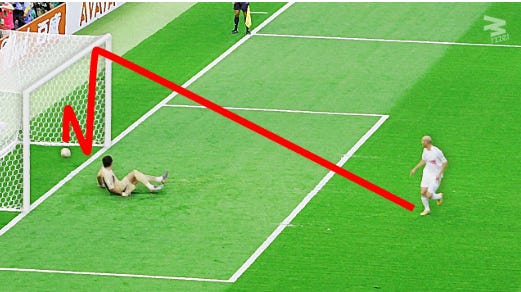
As the 2026 FIFA World Cup enters its decisive knockout phase, penalty kicks and shootouts loom as potential tournament-deciders. For goalkeepers, success hinges on mastering both the unforgiving physics of a ball traveling at high speeds and the cold probabilities that are on the side of the taker.
By the Numbers:
According to Dr Paul McCarthy, world-class penalty conversion rates hover around 79-80% in regular play and drop to roughly 69% in World Cup shootouts, where pressure amplifies misses.
While goalkeepers save only about 20-30% overall in high-stakes scenarios, the data reveals a stark inefficiency: they dive in 94% of attempts yet achieve just 12-14% save rates when committing left or right. Staying central boosts saves to 33%, despite kickers directing the ball down the middle only 15% of the time.
The Physics Challenge:
Most penalties fly at 112-129 km/h. From the 11-metre spot, the ball reaches the goal line in roughly 350-500 milliseconds. A goalkeeper needs 600-800 milliseconds to complete a full lateral dive and cover the necessary distance. Visual reaction time alone consumes ~200 ms, leaving almost no margin for reacting purely to ball flight.
This creates an inescapable tradeoff: dive too early and you guess wrong; wait too long and the ball is already past you. Elite keepers coordinate their dive onset with the placement of the kicker’s non-kicking (plant) foot, which reliably signals direction in over 80% of cases.
A Practical Guide for Goalkeepers
Pre-scout relentlessly. Analyze at least five recent penalties from likely takers. Note preferred side, run-up length, and any patterns under pressure.
Read the body, not the ball. The non-kicking foot’s toe and plant position are the strongest pre-contact cues. Kicking-leg swing comes too late for reliable use.
Fight action bias. The instinct to dive is strong (and crowd-pleasing), but data shows staying central longer dramatically improves odds when the taker is uncertain.
Optimize timing. The best keepers initiate lateral movement as late as possible while still having time to reach the ball—often around 300 ms before contact for experts versus 500 ms for novices.
In shootouts, adapt strategy. Use “educated” guessing based on historical data for that opponent, or a mixed approach that incorporates late information if your agility allows. Some keepers subtly shift position during the run-up to influence the taker.