
A key piece of room-temperature superconductivity may already exist in ordinary materials, new research suggests—removing one of the biggest theoretical barriers to electricity that flows without wasting energy as heat.
Scientists at Utrecht University, Leiden University and LMU Munich showed in the journal Science that electrons in a copper-based superconductor can form the pairs needed for resistance-free current with a binding strength that should hold even at everyday temperatures.
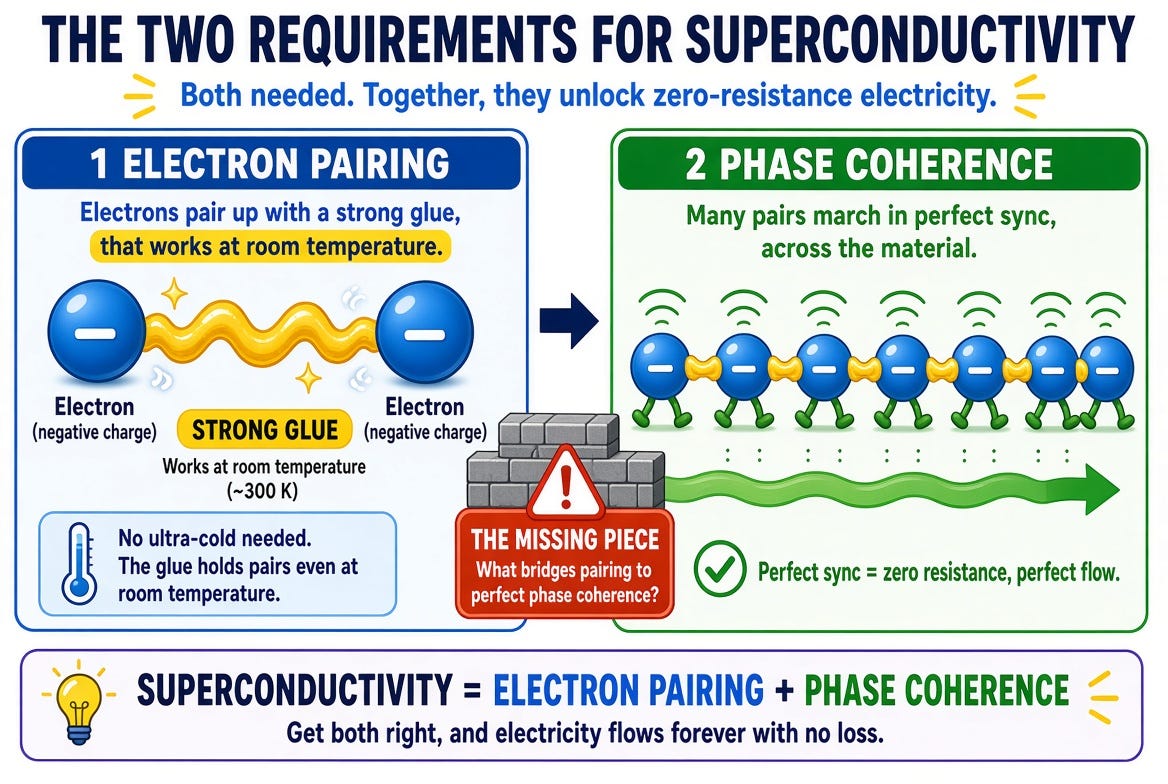
For decades, physicists assumed heat would tear these pairs apart, forcing the use of expensive liquid helium or nitrogen cooling. The new measurements indicate that pairing itself is not the limiting factor. Superconductivity needs two things: electrons must pair up, and those pairs must then move together in lockstep. The study finds that the pairs can form and stay bound far above the temperatures at which the material actually becomes superconducting. The remaining challenge is getting the pairs to stay coordinated without deep freezing.
If researchers solve that coordination problem and produce a practical room-temperature superconductor, the effects would ripple across the economy.
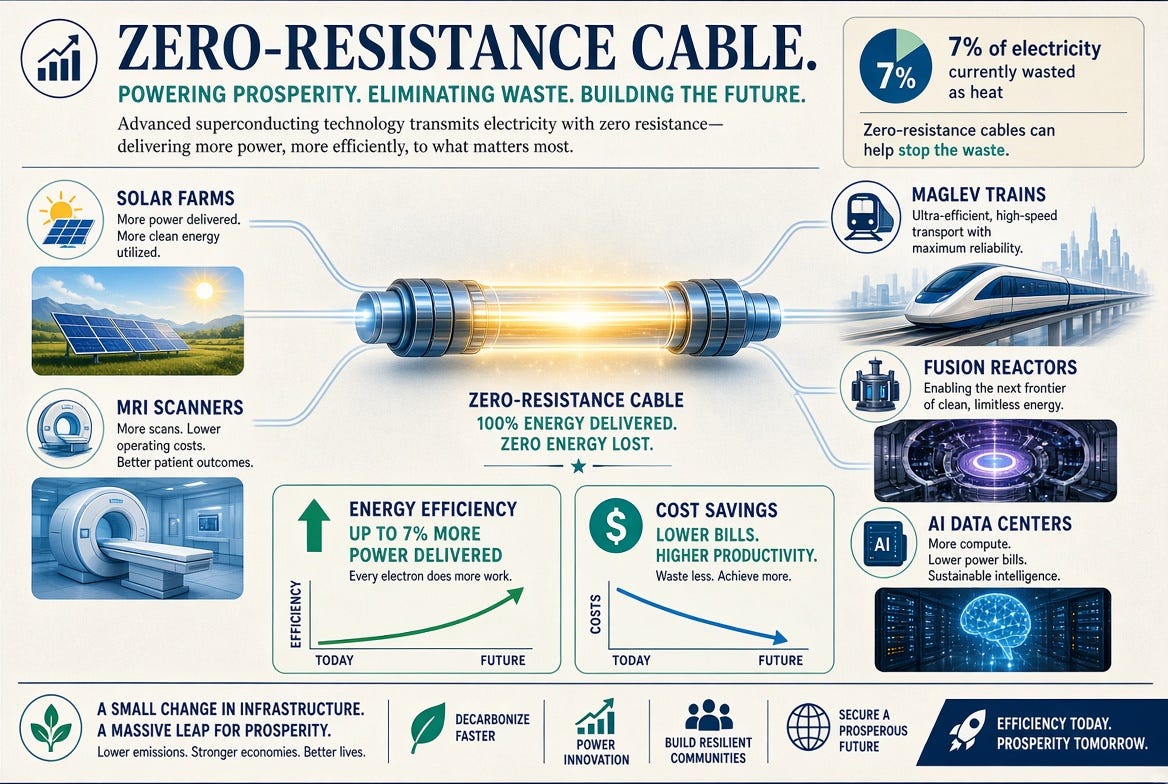
Roughly 7 percent of all electricity generated worldwide is currently lost as heat in transmission lines. Cheaper, lossless electricity has historically tracked with rising living standards.
Zero-resistance cables would cut “power waste”, let distant solar and wind farms supply cities efficiently, and lower the cost of powering factories, data centers and homes.
Fusion reactors, MRI scanners, high-speed trains and energy-hungry AI computing would all shed the heavy cooling systems that now limit their scale and raise their price.
The latest findings do not deliver a room-temperature superconductor, but they show that one of the two essential ingredients - pairing - is already within reach. This narrows the search and raises the odds that the remaining barrier - coherence - can eventually be cleared.