
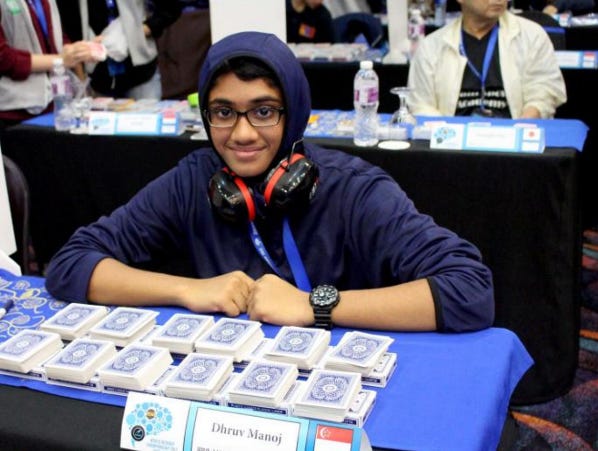
World memory champions routinely memorize hundreds of random digits or the order of multiple shuffled decks of cards in minutes. Yet virtually all report starting with ordinary memories. Their edge comes from deliberate practice of ancient mnemonic systems, not innate talent.
The most dominant technique is the method of loci, or “memory palace.” Competitors visualize a familiar route—a childhood home, daily commute, or building—and place vivid, often bizarre mental images of the information at specific locations along the path. To recall, they simply walk the route in their mind.
Neuroscientist Martin Dresler’s research confirmed this is universal among elite athletes. In one study, novices who trained 30 minutes a day for six weeks using the method more than doubled their ability to recall word lists; gains largely held after four months without further practice. Brain scans showed their activity patterns shifting toward those of champions.
For abstract data such as numbers or cards, athletes layer additional systems. The Major System converts digits into consonant sounds that form words and images. Some of the advanced competitors use the Person-Action-Object (PAO) system: each two-digit combination or card is pre-assigned a person, action, and object. Three items collapse into one memorable scene placed in the palace.
Eight-time World Memory Champion Dominic O’Brien and others emphasize making images multi-sensory, emotional, and exaggerated—the brain retains the unusual far better than the mundane. Consistent drilling turns the conversion process automatic, allowing competitors to encode at high speed.
These methods are learnable. Champions and studies alike show that ordinary people who train systematically can achieve extraordinary results.
I dare say if more educators understood some of these techniques, learning outcomes can be improved dramatically.
And perhaps some can be of assistance in the fight against Alzheimer’s.